

BY STAFF REPORTER
The Food Federation and Allied Workers Union of Zimbabwe (FFAWUZ) has elected a new leadership with a mandate to strengthen workers' rights, advance decent work and confront the growing challenges of wages, job security and working conditions confronting employees across Zimbabwe's food and allied industries.
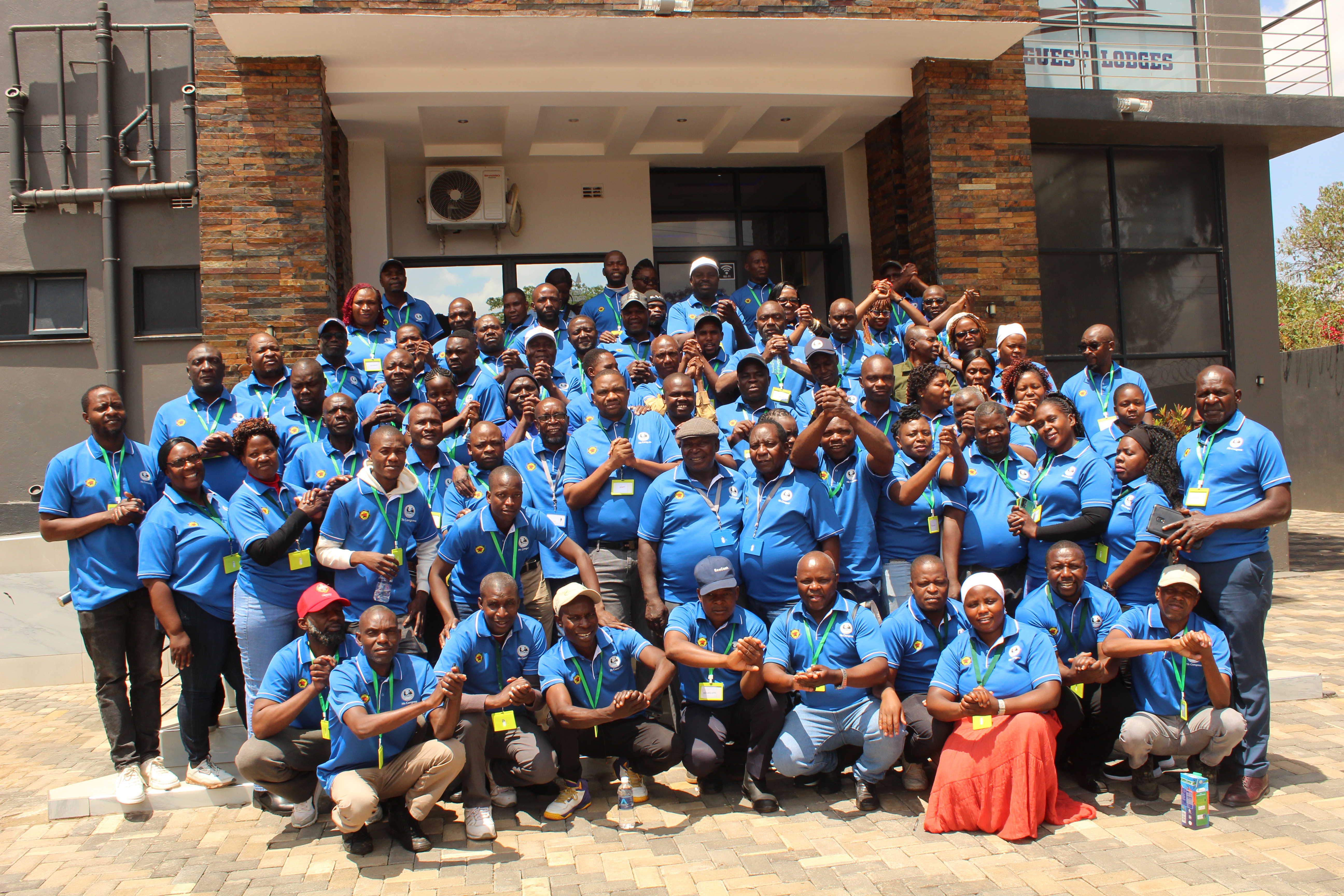
The new National Executive Committee was elected at the union's 7th Quinquennial Congress held at God Given Guests Lodge in Waterfalls, Harare, from 2 to 3 October 2026.
The congress, held in accordance with the FFAWUZ Constitution, brought together delegates from all nine sectors of the union, alongside representatives of the Zimbabwe Congress of Trade Unions (ZCTU), International Union of Food (IUF), 3F, Union to Union, ABVV, Trade Union Veterans, sister unions and other solidarity partners.
The congress was held at a critical time for workers in Zimbabwe's food industry, where questions of wages, decent work, job security, occupational safety, social protection and effective collective bargaining remain central to the labour movement.
The congress elected Cde Brian Bondera as FFAWUZ President, with Cde Rumbidzai Chikovo becoming 1st Vice President, Cde S. Sithole 2nd Vice President and Cde T. Fundira Treasurer.
The Trustees are Cdes A. Magwagwa, Elizabeth Walani, M. Tivabarire and S. Rwauya.
Cde Sithseniso Ndhlovu was elected Women Committee Chairperson, while Cde Vavarirai Bumhira was elected Young Workers Chairperson.
The new leadership will serve for the next five years and was tasked with strengthening the union's capacity to organise workers and deliver tangible improvements in members' lives.
FFAWUZ General Secretary Runesu Dzimiri congratulated the incoming leadership and urged members to support the new executive.
“On behalf of the Secretariat and the entire membership, we congratulate the newly elected NEC and Trustees. We wish them well in their future endeavours as they take up the mammoth task of transforming FFAWUZ into a more powerful, democratic and accountable union that delivers for its members,” Dzimiri said.
He also thanked outgoing leaders for their service and delegates for maintaining discipline throughout the congress.
For the new leadership, one of the biggest challenges will be addressing the gap between wages and the cost of living. Zimbabwe's labour movement has repeatedly raised concern that workers' earnings have failed to keep pace with the cost of basic necessities. In its 2026 May Day message, ZCTU said many workers were earning below the Poverty Datum Line and called for incomes that allow workers and their families to live with dignity rather than merely survive. This challenge is particularly important in the food industry because workers who produce, process, package, transport and distribute essential goods can themselves struggle to afford the food and other necessities they help make available to society.
For FFAWUZ, the question of wages therefore goes beyond periodic salary increases. It raises broader questions about living wages, purchasing power, wage security, currency stability, benefits and the effectiveness of collective bargaining. The union is expected to push for stronger sectoral negotiations capable of producing wages and benefits that reflect the realities facing workers and their families. Existing collective bargaining structures cover various parts of the food and allied industries, including food processing and meat, fish, poultry, abattoir and meat processing. The challenge, however, is ensuring that negotiated agreements translate into meaningful improvements on the shop floor and that employers fully honour agreed wages and conditions.
The congress also provided an opportunity for FFAWUZ to place decent work at the centre of its organising agenda. A job cannot be considered decent simply because a worker is employed. Decent work requires fair remuneration, reasonable working hours, safe and healthy workplaces, freedom of association, collective bargaining, equality and non-discrimination, social protection and respect for workers' dignity. Past disputes in Zimbabwe's food industry have highlighted concerns around delayed or unpaid wages, inadequate wage increases, long working hours and inadequate protective equipment. These issues underline the importance of strengthening workplace representation and ensuring that workers have effective mechanisms through which grievances can be raised and resolved.
Occupational health and safety will therefore remain an important part of the new leadership's mandate, particularly in factories, processing plants, abattoirs, bakeries, breweries, warehouses and other workplaces where employees may be exposed to machinery, chemicals, extreme temperatures, heavy equipment and other occupational hazards.
FFAWUZ will also have to navigate the changing nature of employment in Zimbabwe's food industry. Employers face pressure from rising production costs, competition, changing consumer markets and technological developments. Workers, meanwhile, face the danger that restructuring, automation, outsourcing, labour broking and other cost-cutting measures can result in precarious employment or the erosion of established conditions. The labour perspective is that economic competitiveness must not be achieved by transferring the burden of adjustment onto workers. Productivity, investment and business sustainability are important, but they should go hand in hand with secure employment, skills development, fair remuneration and meaningful worker participation.
The food industry is also strategically important to Zimbabwe's economy because it sits at the intersection of agriculture, manufacturing, retail, logistics and household food security. From a labour perspective, however, increased investment and value addition must translate into decent jobs and decent livelihoods, rather than simply increasing production and profits.
In his acceptance speech, Bondera placed unity at the centre of his leadership agenda and called on the new NEC to serve rather than rule over members.
“We have a bigger voice if we are united, we get more power if we are united, so unity is our priority,” he said.
He also appealed to successful candidates to remain humble and work for the interests of the entire organisation, while encouraging those who were unsuccessful to continue contributing to the union.
“I urge those that have won today to humble themselves and work for the good of FFAWUZ and those that did not make it to know that their value and contributions are always welcome. We are one family,” he said.
Bondera further called for FFAWUZ to ultimately work towards the creation of a stronger and more unified general food industry union.
The proposal reflects a longstanding labour principle that fragmented representation can weaken workers' bargaining power, while greater unity can provide workers with a stronger collective voice when negotiating with employers and engaging government.
The election of a Women Committee Chairperson and Young Workers Chairperson also provides an opportunity for the union to strengthen the participation of women and young workers in decision-making. Women workers continue to face particular challenges in the workplace, including unequal opportunities, discrimination, balancing paid work and family responsibilities, sexual harassment and unequal access to leadership positions.
Young workers, meanwhile, are often disproportionately exposed to insecure employment, low wages and limited opportunities for career progression and skills development.
A modern FFAWUZ will therefore need to ensure that women and young workers are not simply represented in union structures but are actively involved in shaping bargaining priorities, organising strategies and policy decisions.
The congress also reaffirmed the importance of trade union democracy and social dialogue.
For the labour movement, meaningful social dialogue requires employers, workers and government to engage in good faith and to respect agreements reached through established collective bargaining mechanisms. The Labour Act provides a framework for minimum wages and employment conditions, while National Employment Councils provide sectoral platforms for collective bargaining. The challenge is ensuring that these mechanisms remain effective and that workers' voices are not reduced to procedural participation without meaningful outcomes.
FFAWUZ's new leadership therefore faces the task of strengthening workplace organisation, improving membership participation and ensuring that collective bargaining delivers concrete results.
The congress also brought together different generations of the union movement. Veteran founder members Moses Hwingwiri and Peter Chikwati attended the gathering, alongside former General Secretary Unganai Dickson Tarusenga. Their presence served as an important reminder of the history of FFAWUZ and the struggles that shaped the union. For the incoming leadership, the task is now to preserve that legacy while adapting the organisation to the realities of a changing labour market.
The 7th Quinquennial Congress has consequently opened a new chapter for FFAWUZ, one in which the test of the new leadership will not only be its ability to run the union, but its capacity to organise workers, defend collective bargaining, secure better wages, promote safe workplaces and ensure that economic development in the food industry translates into decent work and social justice.
With Bondera and his NEC now at the helm, the message from the congress was clear: unity, worker-centred leadership and decent work must be at the heart of the next five years of FFAWUZ.




Leave a comment